

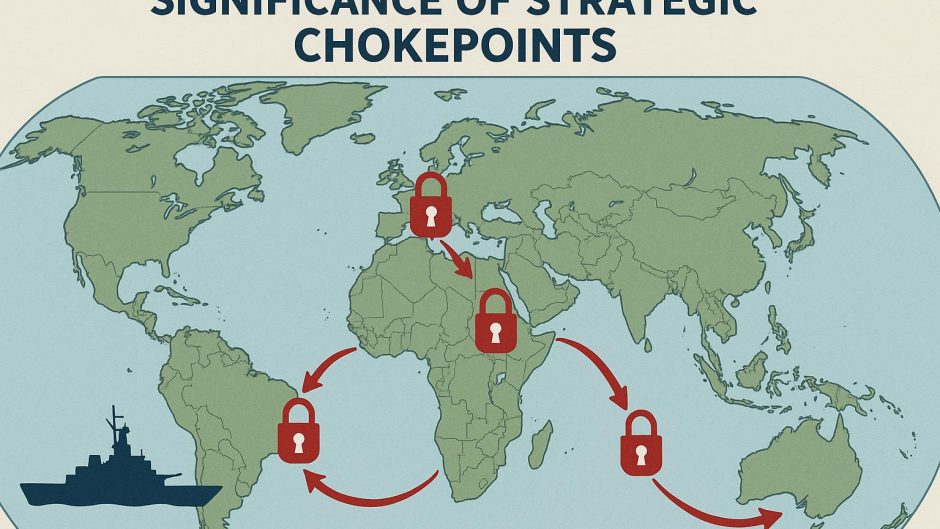
The Geopolitical Importance of Strategic Chokepoints
Strategic chokepoints on the world’s map are narrow passages that hold substantial geopolitical significance because they often serve as essential transit routes for global trade and naval movement. These chokepoints can dramatically influence the flow of goods, energy resources, and military forces, and therefore have significant implications for international security and economic stability.
Defining Strategic Chokepoints
A strategic chokepoint is typically a narrow strait, canal, or pass that connects two larger areas of navigable water. These natural or man-made channels are crucial for maritime transportation, serving as gateways that facilitate or restrict the flow of people and goods across regions. Some of the most notable global chokepoints include the Strait of Hormuz, the Suez Canal, and the Panama Canal.
Historical Context and Evolution
The significance of strategic chokepoints is deeply rooted in history. For centuries, control over these passages has been an influential factor in global dominance. Ancient civilizations, like the Romans and the Phoenicians, recognized the value of controlling key maritime routes to establish their empires. Throughout history, the expansion and contraction of empires often coincided with the ability to secure and dominate these vital passages.
As global trade expanded, so did the strategic significance of chokepoints. The development of man-made canals, such as the Suez and the Panama Canals, marked a turning point in maritime navigation, offering more efficient global trade routes. These developments were not just feats of engineering but were also major strategic milestones that have shaped global commerce and geopolitical relations ever since.
Economic Implications
The economic significance of these chokepoints cannot be overstated. Approximately 20% of the world’s petroleum passes through the Strait of Hormuz, linking the Persian Gulf with the Gulf of Oman and the Arabian Sea. The ability to control or defend such chokepoints can give nations substantial leverage over global oil supplies, impacting prices and availability internationally.
The Suez Canal and the Panama Canal demonstrate the value of time and cost savings in maritime shipping. These man-made waterways provide essential shortcuts that drastically reduce travel distances for commercial shipping routes. For instance, the Suez Canal reduces the maritime journey from Europe to South Asia by about 7,000 kilometers compared to the trip around the southern tip of Africa, while the Panama Canal connects the Atlantic and Pacific Oceans, saving about 13,000 kilometers on the route around Cape Horn.
Moreover, the economic ramifications of chokepoints extend beyond mere savings in time and distance. They have the potential to influence global market dynamics. For instance, disruptions in these areas can lead to spikes in shipping insurance premiums, increased maritime tariffs, and the need for rerouting traffic, all of which contribute to inflated costs for end consumers.
Military and Security Considerations
Beyond commerce, strategic chokepoints hold military importance. Control over these areas can enable or prevent naval fleets from entering or exiting critical regions during times of conflict. The ability to quickly move forces through these chokepoints or, conversely, to block rival powers from doing so, is a substantial military advantage.
For instance, the Bosphorus Strait in Turkey provides a critical passage for Russian naval operations between the Black Sea and Mediterranean. Similarly, the Strait of Malacca, a key maritime route between the Indian Ocean and the Pacific Ocean, is so vital that any disruption could have an impact beyond regional trade, affecting global commerce as well.
Strategic chokepoints also serve as points of military presence and surveillance. Nations positioned at or near these chokeholds often establish military outposts or conduct regular patrols, emphasizing their preventive and defensive capabilities. This military footprint can serve as a deterrent against potential aggression, thereby maintaining peace and stability within these crucial sectors.
Potential Vulnerabilities and Risks
While strategic chokepoints confer advantages, they also present vulnerabilities. The concentration of vast amounts of the world’s oil supply and other crucial goods in these narrow passages makes them potential targets for geopolitical tension and conflict. Blockades, piracy, or military skirmishes in or near these areas can disrupt global supply chains and lead to significant economic and security consequences.
The risks associated with chokepoints have led to tremendous investments in security measures. Anti-piracy operations, naval escorts, and cooperative multinational military exercises aim to minimize the threats posed by potential disruptions. Concurrently, the construction of pipelines bypassing maritime chokepoints and development of overland trade routes reflect strategic efforts to diversify transit options, thereby reducing reliance on these vulnerable water nodes.
Oil-producing nations and major energy consumers are particularly sensitive to the volatility stemming from chokepoint disruptions. Thus, bilateral and multilateral agreements often focus on ensuring the stability and security of these key passages, underscoring their importance in maintaining continuous global supply chains.
Future Perspectives and Challenges
As global trade continues to evolve, the future of strategic chokepoints remains subject to considerable challenges. The advent of climate change, for example, could open up new routes, particularly in the Arctic, potentially altering traditional maritime trade patterns. Technological advancements and infrastructural developments could also reshape existing usage and control of these essential waterways.
Furthermore, the geopolitical landscape continues to shift, with emerging economies asserting greater influence over international trade routes. This could lead to increased competition over controlling key chokepoints, potentially heightening tensions among powerful state actors. International organizations may need to step in more frequently as mediators to navigate the overlapping interests at these crucial junctures.
In conclusion, the strategic importance of chokepoints highlights their role in both facilitating global trade and representing critical flashpoints for international relations. Their influence on economic and military strategies emphasizes the need for continuous diplomatic and cooperative efforts to maintain their security and accessibility. Understanding these geopolitical linchpins is essential for comprehending broader global dynamics. The balance between leveraging the advantages while mitigating the risks associated with chokepoints will likely shape international relations and global commerce in foreseeable future epochs.
This article was last updated on: January 1, 2026



Recent Comments