

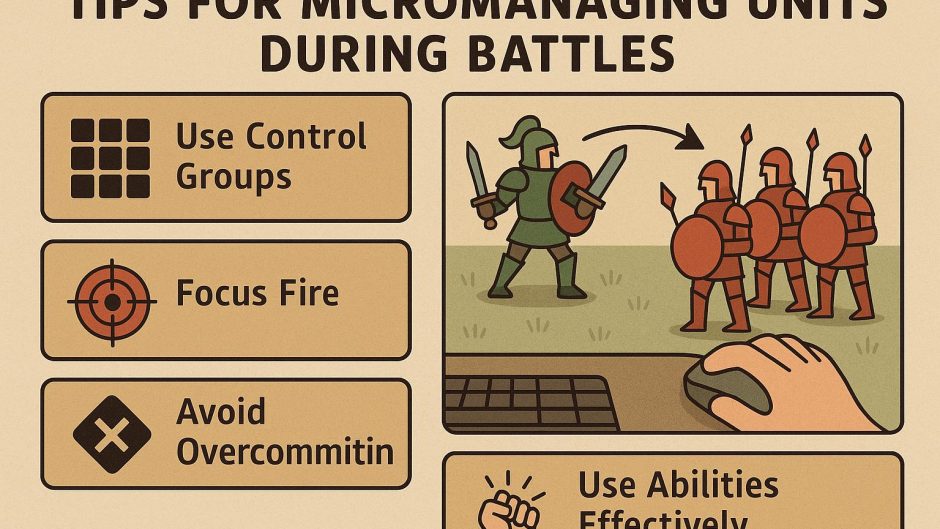
Understanding the Importance of Micromanagement
In the realm of real-time strategy (RTS) games, the concept of micromanagement takes center stage as a crucial factor for achieving victory. Micromanagement involves the detailed control and precise management of individual units during a battle. This method is pivotal in optimizing both effectiveness and efficiency, setting apart novice players from seasoned experts. The journey to mastering micromanagement is not merely about executing commands but about strategic thinking and continuous practice.
Know Your Units
Effective micromanagement begins with a deep understanding of the units at your disposal. Each unit type in an RTS game is designed with unique strengths and weaknesses, which can include specific attributes such as attack range, speed, and special abilities. Understanding these attributes is essential if you wish to make informed and strategic decisions on the battlefield.
For instance, a unit with a long attack range can be beneficial for harassing the enemy from a distance, whereas a unit with high speed may be well-suited for flanking maneuvers. Knowledge of these unit characteristics enables players to deploy them in roles they excel at, maximizing the overall efficacy of their army.
Utilize Unit Abilities
Beyond basic attributes, many units harbor special abilities that, when harnessed correctly, can alter the tide of battle significantly. These abilities often come with cooldowns, necessitating precise timing and judicious use. Practicing the rapid selection and activation of such abilities is integral to enhancing the combat potency of your units.
For example, a unit that can stun enemy forces for a brief period can be used strategically to neutralize threats during critical moments. By incorporating the use of these abilities into your micromanagement routine, you build a more dynamic and versatile fighting force capable of adapting to various scenarios.
Adopt Optimal Formations
Another key aspect of micromanagement is the strategic arrangement of units in formations. Properly organized units can significantly boost their overall performance on the battlefield. For example, placing ranged units behind melee units can shield them from direct combat while allowing them to deliver continuous firepower without obstruction.
The optimal formation is highly contingent on both the battlefield terrain and the composition of the enemy forces. A well-planned formation can create synergies among your units, amplifying their individual strengths and compensating for any weaknesses. Adjusting formations dynamically in response to the evolving battlefield conditions is a hallmark of effective micromanagement.
Consider Terrain Advantages
The terrain of a battlefield is not just a backdrop but a pivotal element influencing unit performance. Factors such as elevation, obstacles, and choke points can impact movement and attack capabilities. For instance, positioning units on higher ground can offer a tactical advantage, enhancing their attack impact and survivability.
Understanding the terrain and effectively utilizing it to your advantage can tip the scales of battle in your favor. Positioning units behind cover, using obstacles to funnel enemy movements, or taking advantage of choke points to defend against numerically superior forces are all practical applications of terrain analysis. The goal is to leverage the natural features of the battlefield to enhance your strategic positioning and tactical options.
Commanding Units Efficiently
The heart of efficient micromanagement lies in the swift and precise execution of commands. Acquiring this capability requires familiarity with the game’s hotkeys, grouping mechanisms, and user interface.
Utilize Hotkeys
Hotkeys serve as shortcuts that allow players to execute orders with speed and precision, bypassing the need to navigate through complex interfaces. Customizing these hotkeys to correspond with your playstyle can significantly bolster your response times during frantic, high-stakes battles.
Regular use of hotkeys fosters muscle memory, which in turn enhances both speed and accuracy. For players looking to excel in micromanagement, this muscle memory becomes an invaluable asset, freeing cognitive resources for strategic planning and decision-making.
Manage Unit Groups
Managing groups of units is another core aspect of micromanagement. By organizing units into groups based on type or role, players can issue commands more efficiently and ensure cohesive actions across their forces. This approach allows for the simultaneous control of multiple units, facilitating a more coordinated and unified operation.
As the battle progresses, it is crucial to adjust these group compositions based on the strategic demands of the situation. Regularly reorganizing your unit groups ensures tactical flexibility and allows you to respond dynamically to shifting conditions on the battlefield. By maintaining a well-coordinated force, you can keep the upper hand against opponents who are less organized.
Practice Makes Perfect
The path to mastering micromanagement is paved with practice. Observing expert gameplay through streaming platforms like Twitch or video-sharing platforms like YouTube provides invaluable insights into advanced techniques and strategies.
By incorporating these insights into your practice sessions, you can systematically refine your micromanagement skills over time. Practice sessions should not only aim to reinforce basic skills but also seek to experiment with new strategies and tactics. Such an iterative approach to learning allows you to continuously improve and expand your repertoire of micromanagement techniques.
In conclusion, effective micromanagement in RTS games hinges on a detailed knowledge of units, meticulous strategic planning, and rapid execution of commands. By honing these skills, players can significantly enhance their battlefield prowess, elevating their chances of success in the competitive realm of RTS gaming. Through continuous practice and strategic application, the art of micromanagement transforms from a daunting task into a powerful tool for crafting victory.
This article was last updated on: March 15, 2026

Recent Comments